Yenn

AI-powered AR recipe generator that transforms leftover ingredients into creative meals. It bridges the “awareness-to-action gap”, the moment between noticing food in the fridge and confidently using it, helping users reduce food waste, save money, and make sustainable cooking decisions.

Role

UX Researcher · Interaction Designer · Prototyper

Industry

Food Technology · Sustainable Design · Artificial Intelligence

Duration

10 Weeks
Stage 1 · Problem Discovery & Research

To understand how and why people waste food at home, we began by exploring behavioral patterns in leftover management. According to the EPA and MITRE–Gallup (2023), approximately 80% of Americans discard edible leftovers every week, largely due to forgetfulness and uncertainty about food safety.

We conducted contextual inquiries and interviews with university students and young professionals who frequently cook at home. The findings highlighted recurring challenges:

Key Insights
  • Forgetting leftovers: Users rarely remember what’s hidden behind new groceries.

  • Trust and safety doubts: Many rely on smell or appearance rather than expiration data.

  • Ingredient-first cooking: People pick what looks usable, then search for matching recipes.

  • Over-cooking: Guessing portions creates new leftovers, continuing the cycle.

User Quote

“I always tell myself I’ll use what’s in the fridge… then I find it moldy two weeks later.”

Research Conclusion

Household food waste stems from an “awareness-to-action gap”. Users know what’s in their fridge but lack timely reminders or creative ideas to use it before it spoils.

This discovery led to YENN’s design goal:
Transform the refrigerator into an intelligent assistant that helps users see, remember, and creatively use what they already have.

Stage 2 · Design Strategy

Our design strategy emerged from the research insights. We focused on augmenting natural cooking behavior rather than changing it.

Design Objectives

1. Seamless Awareness
YENN should recognize fridge contents automatically through an AR-enabled camera view, turning visual inventory into immediate meal ideas.

2. Just-in-Time Support
The system should surface recipes and spoilage cues at the exact moment users open the fridge when decisions happen.

3. Sustainability Feedback
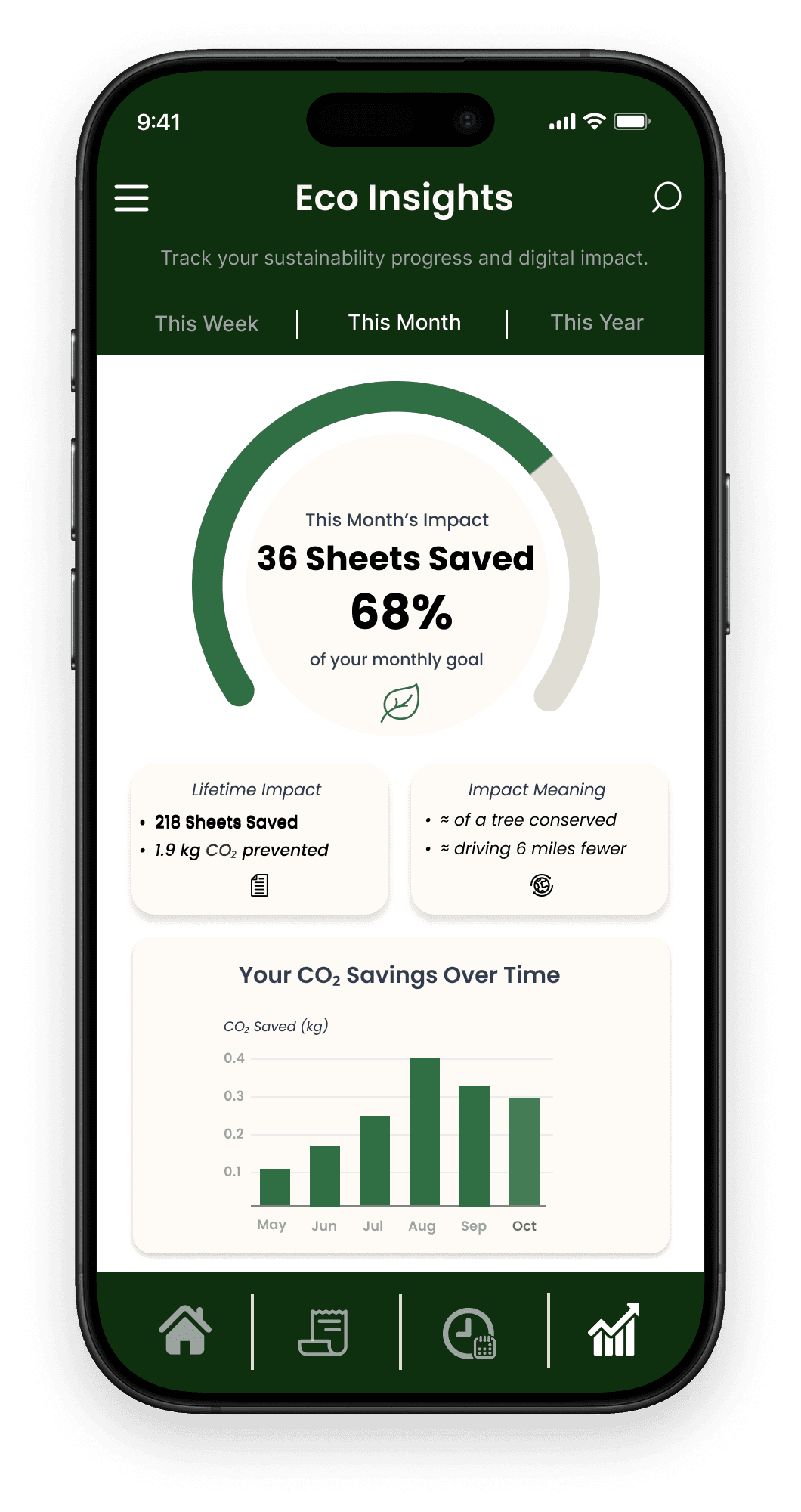
Provide visible, rewarding insights into how much food, money, and CO₂ the user saves by cooking leftovers instead of wasting them.

System Approach

Using a systems-thinking framework, we mapped relationships between users, food storage habits, and sustainability goals. The experience focuses on two key intervention points:

  • Post-meal storage: When leftovers are placed in the fridge.

  • Meal planning: When users decide what to cook next.

Targeting these phases allows YENN to close the feedback loop between storage and reuse, helping users act before food spoils.

Stage 3 · Prototype Development

We translated our design strategy into a functional proof-of-concept prototype built in Figma.
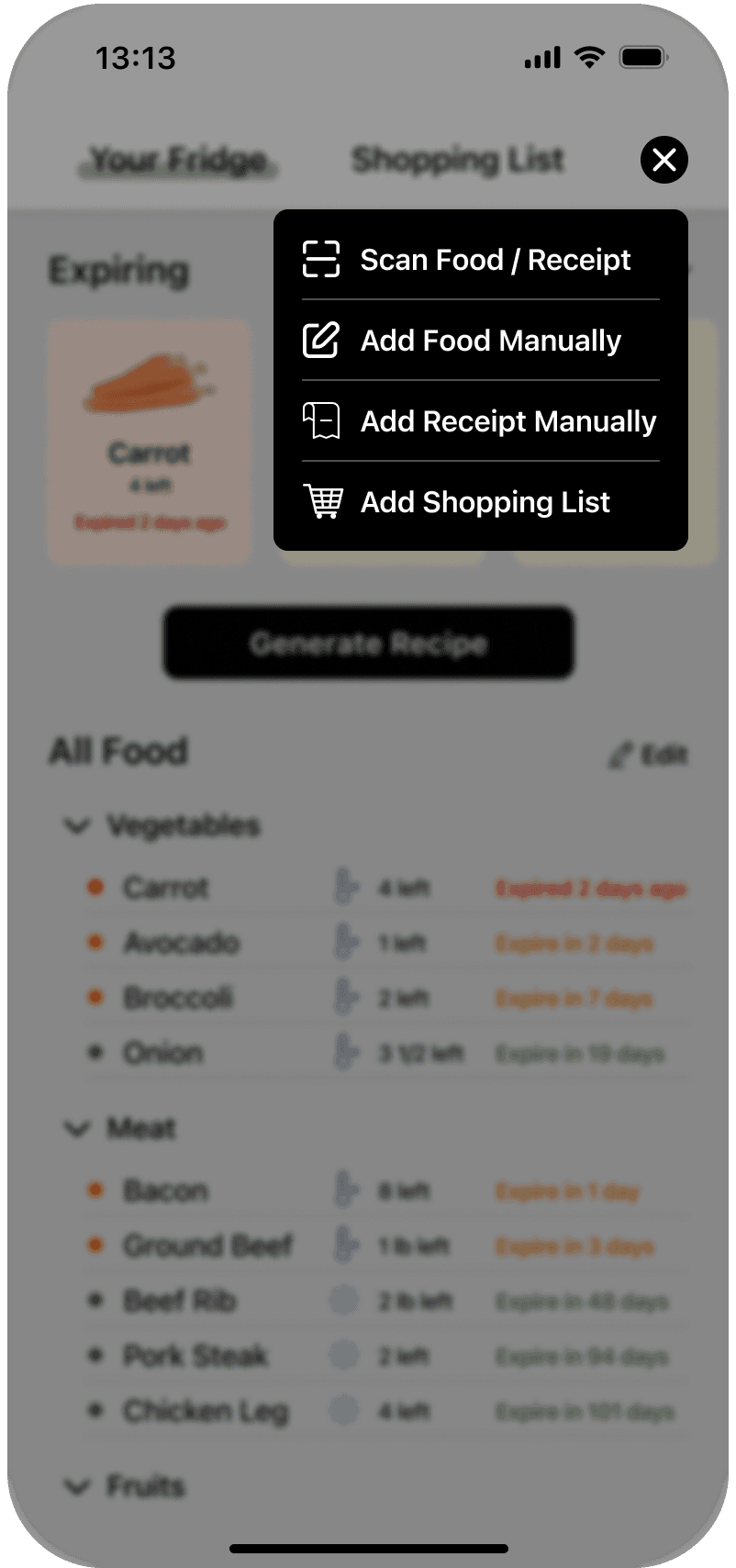
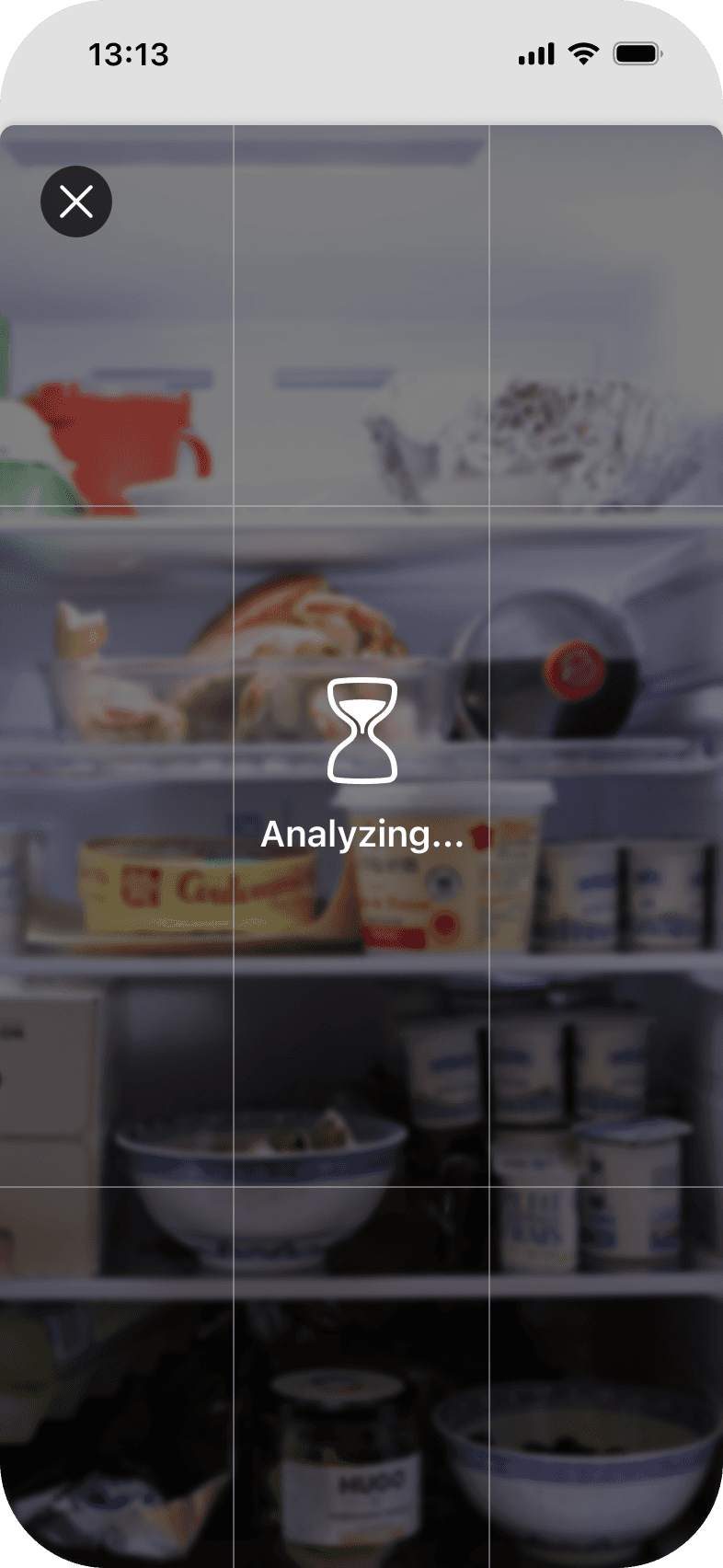
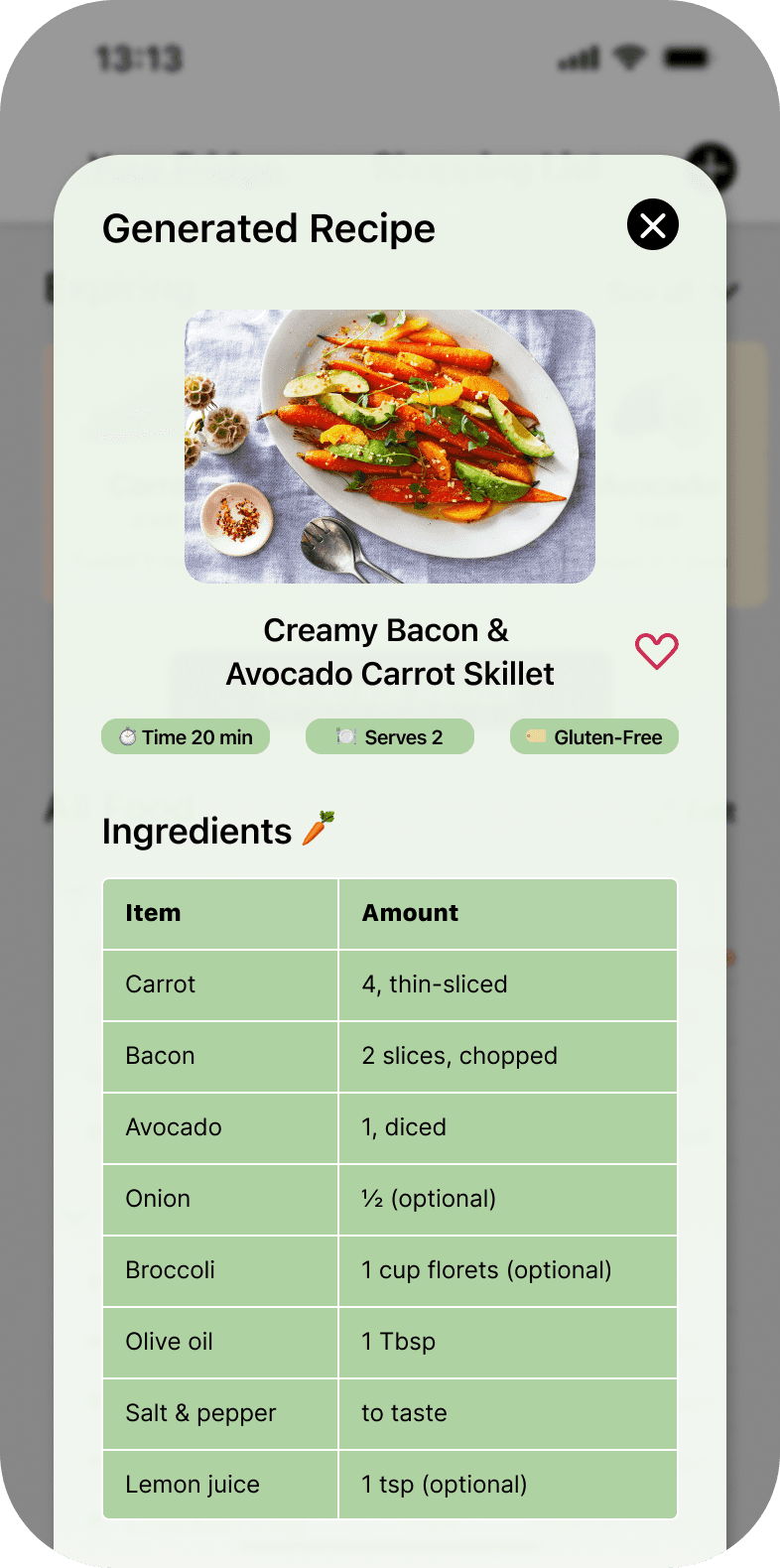
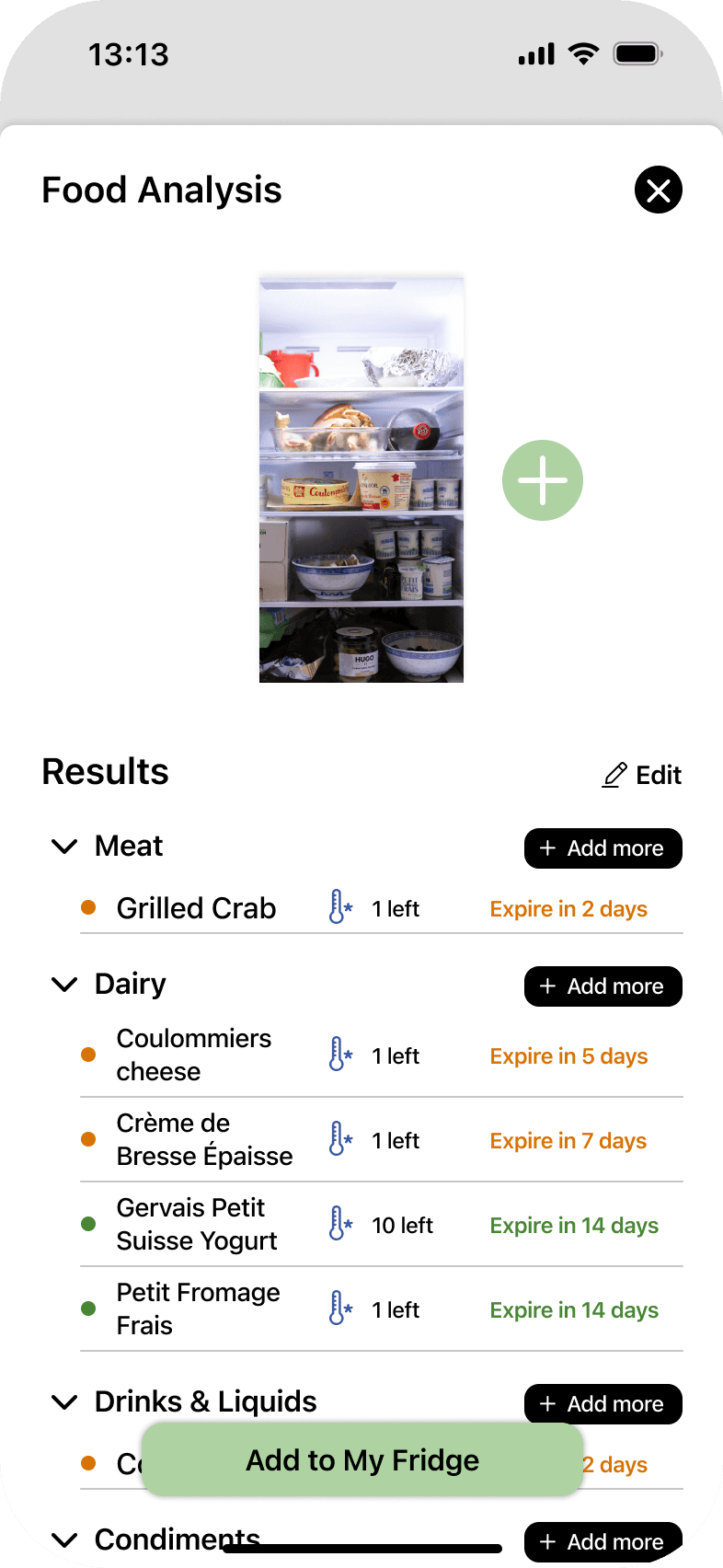
The prototype simulates the core AR flow by scanning fridge contents, recognizing items, and suggesting recipes instantly.

1. AR-Based Scanning

When users open the fridge, they point their phone at it.
YENN automatically:

  • Detects and labels ingredients with bounding boxes.

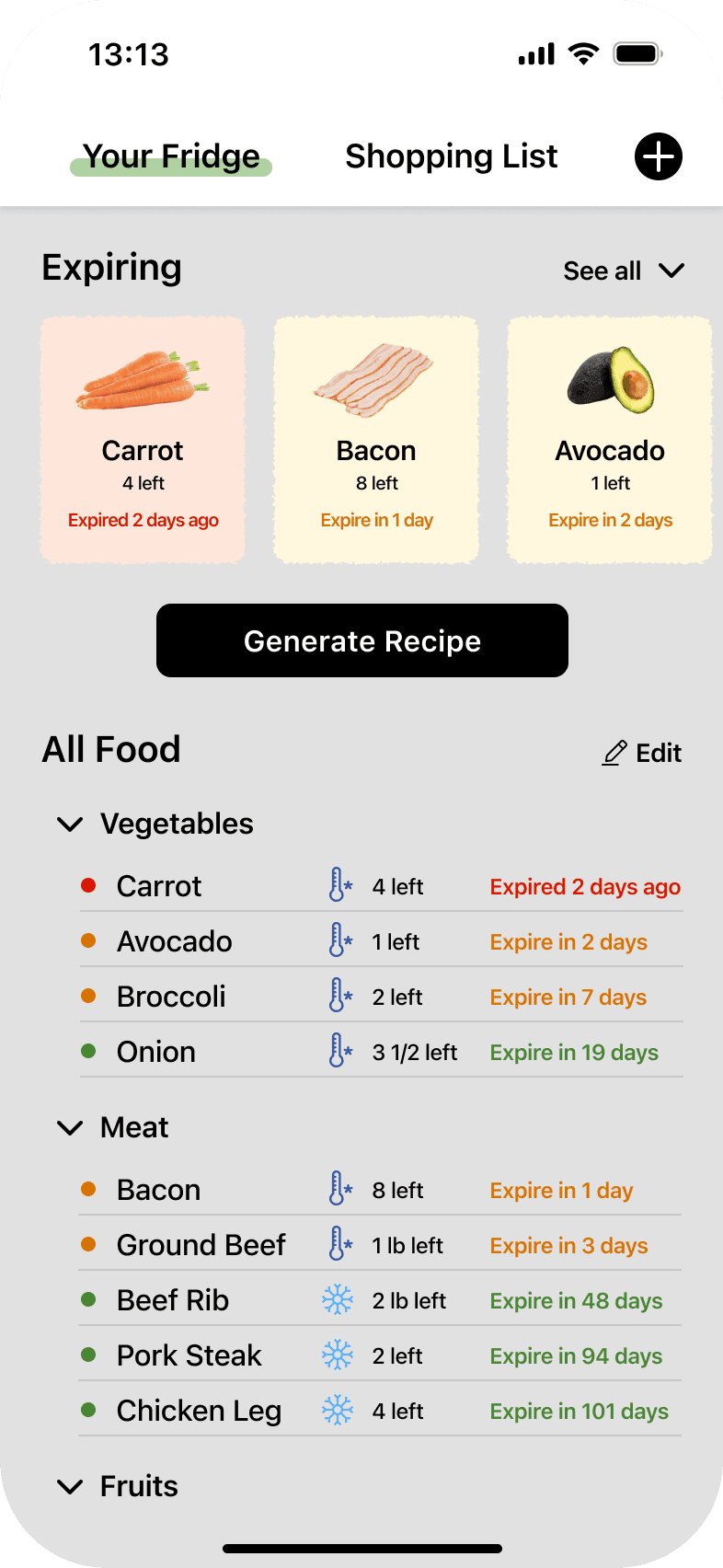
  • Displays freshness indicators (Safe, Soon, Expiring).

  • Suggests 2–3 recipes using the selected items.

2. Smart Expiry Notifications

Users receive subtle reminders when ingredients are about to expire.
The system tracks items over time, notifying users only when action is needed, preventing waste without overwhelming them.

3. Interface & Visual Language
  • A soft green and neutral palette communicates freshness and sustainability.

  • Simple, card-based layouts minimize cognitive load.

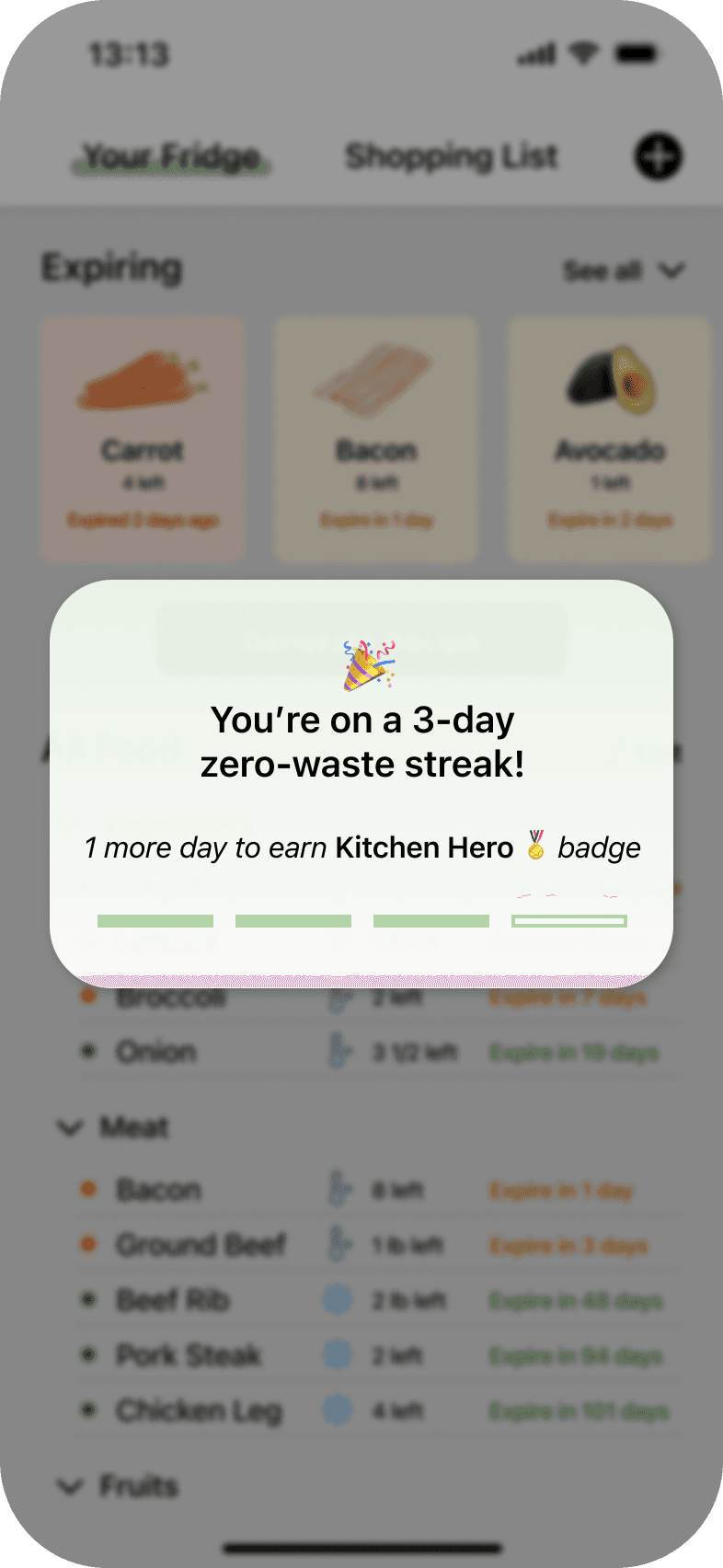
  • The Rewarding Dashboard visualizes users' zero-waste streaks and reward badges.

Technical Feasibility

At this stage, we focused on “role” and “look-and-feel” testing, validating concept desirability before investing in complex computer-vision models. The prototype demonstrates interaction timing and user trust during the fridge-open decision moment.

Stage 1 · Problem Discovery & Research

To understand how and why people waste food at home, we began by exploring behavioral patterns in leftover management. According to the EPA and MITRE–Gallup (2023), approximately 80% of Americans discard edible leftovers every week, largely due to forgetfulness and uncertainty about food safety.

We conducted contextual inquiries and interviews with university students and young professionals who frequently cook at home. The findings highlighted recurring challenges:

Key Insights
  • Forgetting leftovers: Users rarely remember what’s hidden behind new groceries.

  • Trust and safety doubts: Many rely on smell or appearance rather than expiration data.

  • Ingredient-first cooking: People pick what looks usable, then search for matching recipes.

  • Over-cooking: Guessing portions creates new leftovers, continuing the cycle.

User Quote

“I always tell myself I’ll use what’s in the fridge… then I find it moldy two weeks later.”

Research Conclusion

Household food waste stems from an “awareness-to-action gap”. Users know what’s in their fridge but lack timely reminders or creative ideas to use it before it spoils.

This discovery led to YENN’s design goal:
Transform the refrigerator into an intelligent assistant that helps users see, remember, and creatively use what they already have.

Stage 2 · Design Strategy

Our design strategy emerged from the research insights. We focused on augmenting natural cooking behavior rather than changing it.

Design Objectives

1. Seamless Awareness
YENN should recognize fridge contents automatically through an AR-enabled camera view, turning visual inventory into immediate meal ideas.

2. Just-in-Time Support
The system should surface recipes and spoilage cues at the exact moment users open the fridge when decisions happen.

3. Sustainability Feedback
Provide visible, rewarding insights into how much food, money, and CO₂ the user saves by cooking leftovers instead of wasting them.

System Approach

Using a systems-thinking framework, we mapped relationships between users, food storage habits, and sustainability goals. The experience focuses on two key intervention points:

  • Post-meal storage: When leftovers are placed in the fridge.

  • Meal planning: When users decide what to cook next.

Targeting these phases allows YENN to close the feedback loop between storage and reuse, helping users act before food spoils.

Stage 3 · Prototype Development

We translated our design strategy into a functional proof-of-concept prototype built in Figma.
The prototype simulates the core AR flow by scanning fridge contents, recognizing items, and suggesting recipes instantly.

1. AR-Based Scanning

When users open the fridge, they point their phone at it.
YENN automatically:

  • Detects and labels ingredients with bounding boxes.

  • Displays freshness indicators (Safe, Soon, Expiring).

  • Suggests 2–3 recipes using the selected items.

2. Smart Expiry Notifications

Users receive subtle reminders when ingredients are about to expire.
The system tracks items over time, notifying users only when action is needed, preventing waste without overwhelming them.

3. Interface & Visual Language
  • A soft green and neutral palette communicates freshness and sustainability.

  • Simple, card-based layouts minimize cognitive load.

  • The Rewarding Dashboard visualizes users' zero-waste streaks and reward badges.

Technical Feasibility

At this stage, we focused on “role” and “look-and-feel” testing, validating concept desirability before investing in complex computer-vision models. The prototype demonstrates interaction timing and user trust during the fridge-open decision moment.

Stage 4 · User Testing & Iteration

We conducted Wizard-of-Oz usability sessions with five participants (students and young professionals) to observe how intuitive the AR interface felt in real use.

User Feedback
  • Comprehension & Trust: 80% understood that the app was “scanning” and trusted its results.

  • Clarity of Visuals: Color-coded freshness tags were intuitive, but some requested a legend for confirmation.

  • Ease of Use: Median decision time was 22 seconds, meeting the goal for minimal friction.

  • Delight Factor: Participants described the experience as “fun and satisfying” and liked seeing suggestions directly on the fridge view.

Design Iterations
  • Added animated scan lines to clarify the scanning process.

  • Introduced a manual edit button for correcting AI mislabels.

  • Reorganized recipe results by food category for faster navigation.

  • Implemented a “Zero-Waste Streak” badge to gamify sustainability progress.

These refinements made YENN both more trustworthy and engaging while maintaining its effortless character.

Stage 5 · Implementation Plan & Future Development

YENN continues to evolve toward a fully functional prototype that integrates computer vision and machine learning with real-world user needs.

Next Steps
Technical Development
  • Integrate YOLOv8 or similar CV models for ingredient recognition.

  • Expand recipe database to include cultural and dietary diversity.

  • Develop local-first data processing to enhance privacy and speed.

Design Expansion
  • Add onboarding flows for first-time users.

  • Refine Eco Dashboard visualizations for impact clarity.

  • Explore cross-platform compatibility (iOS + Android).

Evaluation Goals
  • Measure comprehension of the scanning metaphor.

  • Assess perceived usefulness of freshness cues and eco insights.

  • Test long-term engagement through reminder frequency and streak systems.
Reflection & Key Learnings

Designing YENN taught me how AR and AI can make sustainability feel personal and engaging. I learned that successful environmental design doesn’t rely on guilt or effort; it depends on visibility, timing, and trust.

Key Takeaways
  • Design around habits, not against them.
    People naturally open their fridge before cooking, which is the perfect design moment.

  • Make sustainability effortless.
    Automation and subtle cues outperform manual tracking or guilt-driven nudges.

  • Visual storytelling drives motivation.
    Seeing freshness states and waste reduction in real time encourages repeat use.

YENN proves that sustainable design can be both delightful and practical, turning a daily routine into an act of environmental care.

Reflection & Key Learnings

Designing YENN taught me how AR and AI can make sustainability feel personal and engaging. I learned that successful environmental design doesn’t rely on guilt or effort; it depends on visibility, timing, and trust.

Key Takeaways
  • Design around habits, not against them.
    People naturally open their fridge before cooking, which is the perfect design moment.

  • Make sustainability effortless.
    Automation and subtle cues outperform manual tracking or guilt-driven nudges.

  • Visual storytelling drives motivation.
    Seeing freshness states and waste reduction in real time encourages repeat use.

YENN proves that sustainable design can be both delightful and practical, turning a daily routine into an act of environmental care.

Other projects