Foodloops
A coordinated food recovery platform designed to orchestrate donors, recipients, and volunteer drivers
Role
UX Researcher · Systems Designer · Product Designer
Industry
Civic Tech · Sustainability · Logistics
Duration
21 Weeks (in progress)
Designing a Connected Donation and Pickup Routing Ecosystem
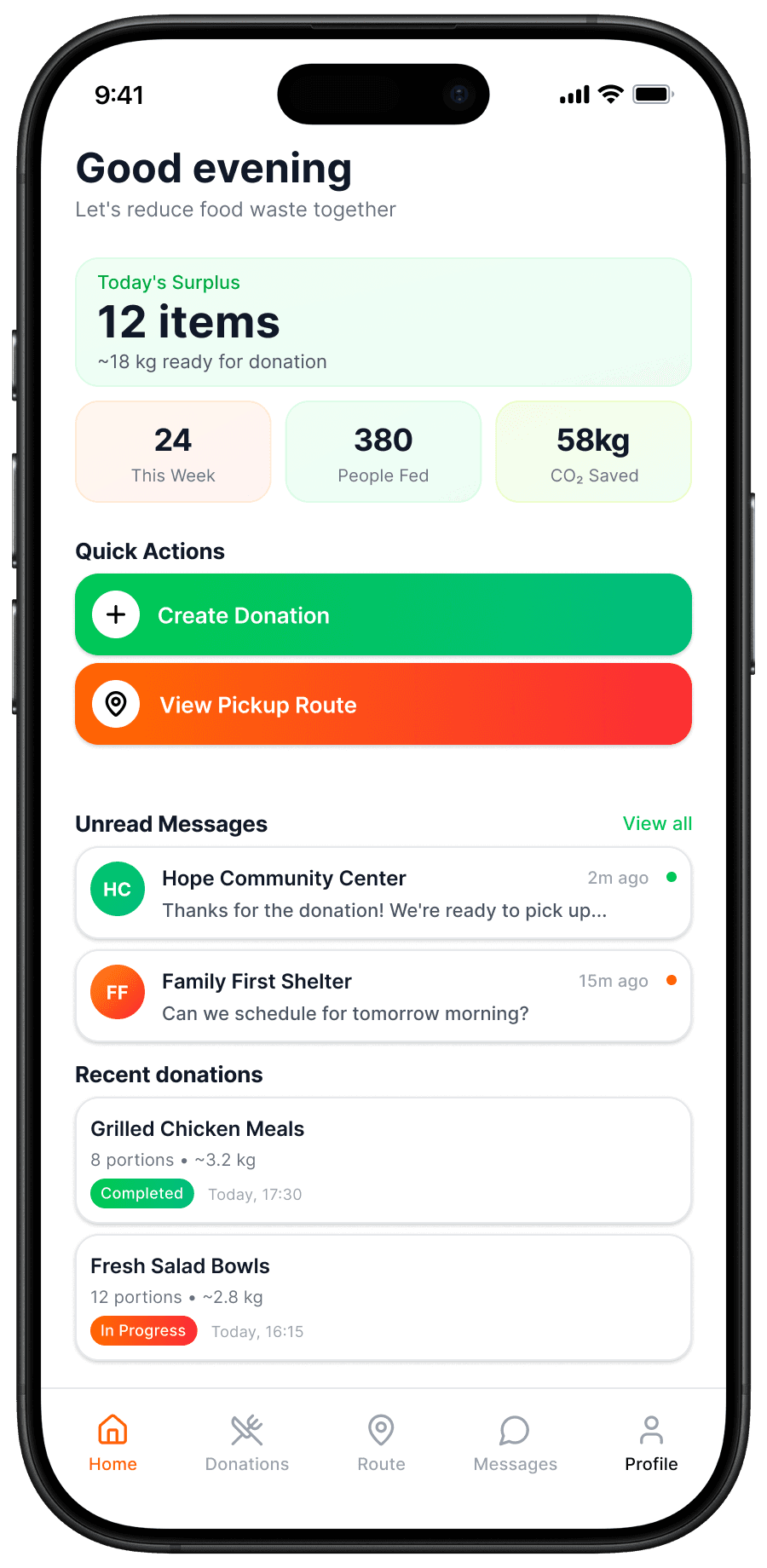
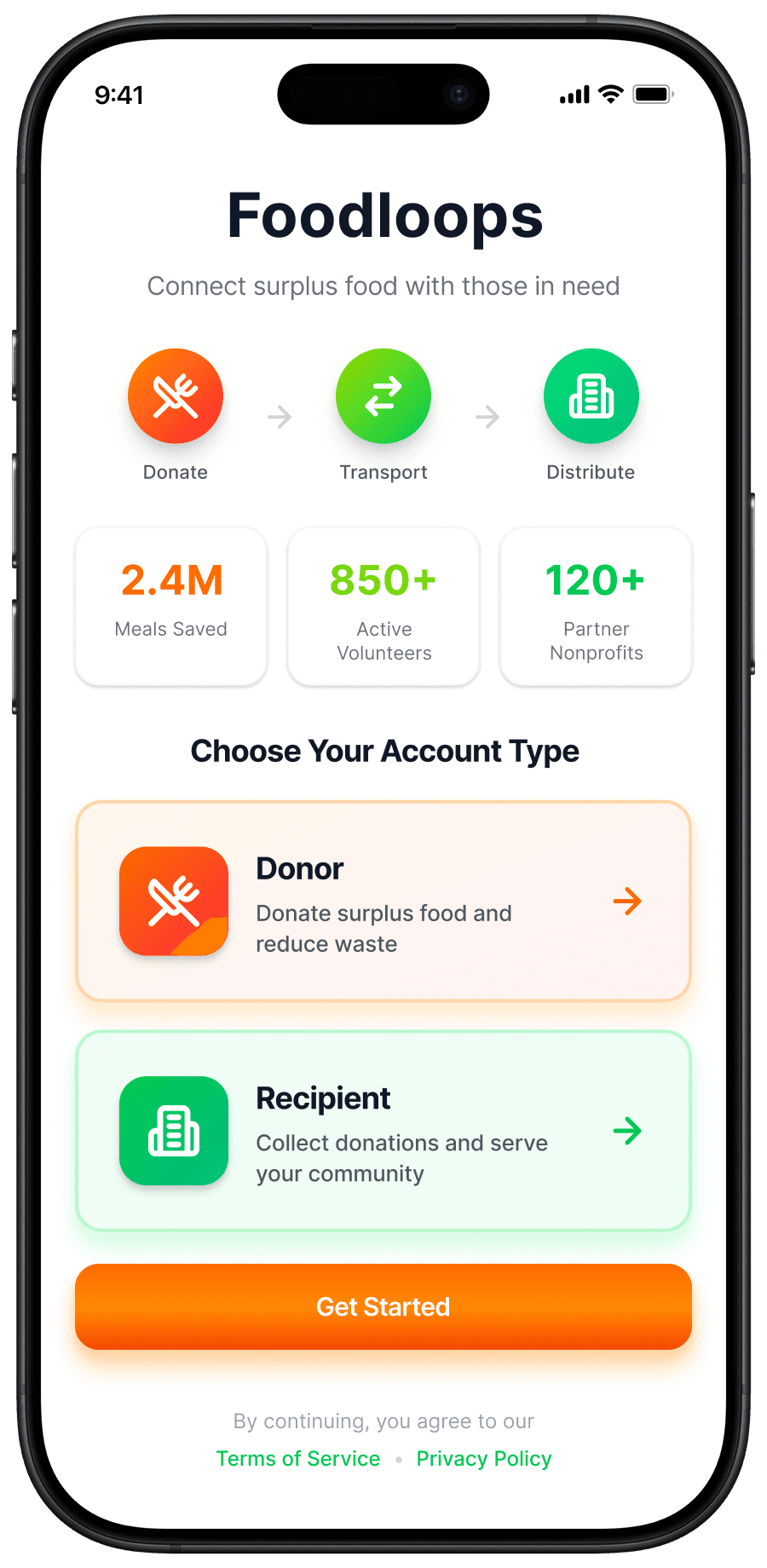
Foodloops is a coordinated food recovery platform designed to orchestrate donors, recipients, and volunteer drivers within a shared infrastructure.
What began as a restaurant-to-food bank concept evolved into a broader system. Through stakeholder interviews and testing, we reframed the model to support donor-to-recipient coordination, enabling grocery stores, bakeries, event organizers, nonprofits, shelters, and community groups to participate within the same architecture.
The core issue was not the willingness to donate; it was a fragmented service flow.
• Surplus is generated unpredictably
• Recipients operate under resource constraints
• Volunteers require routing clarity
Without shared visibility, coordination becomes manual and inconsistent.
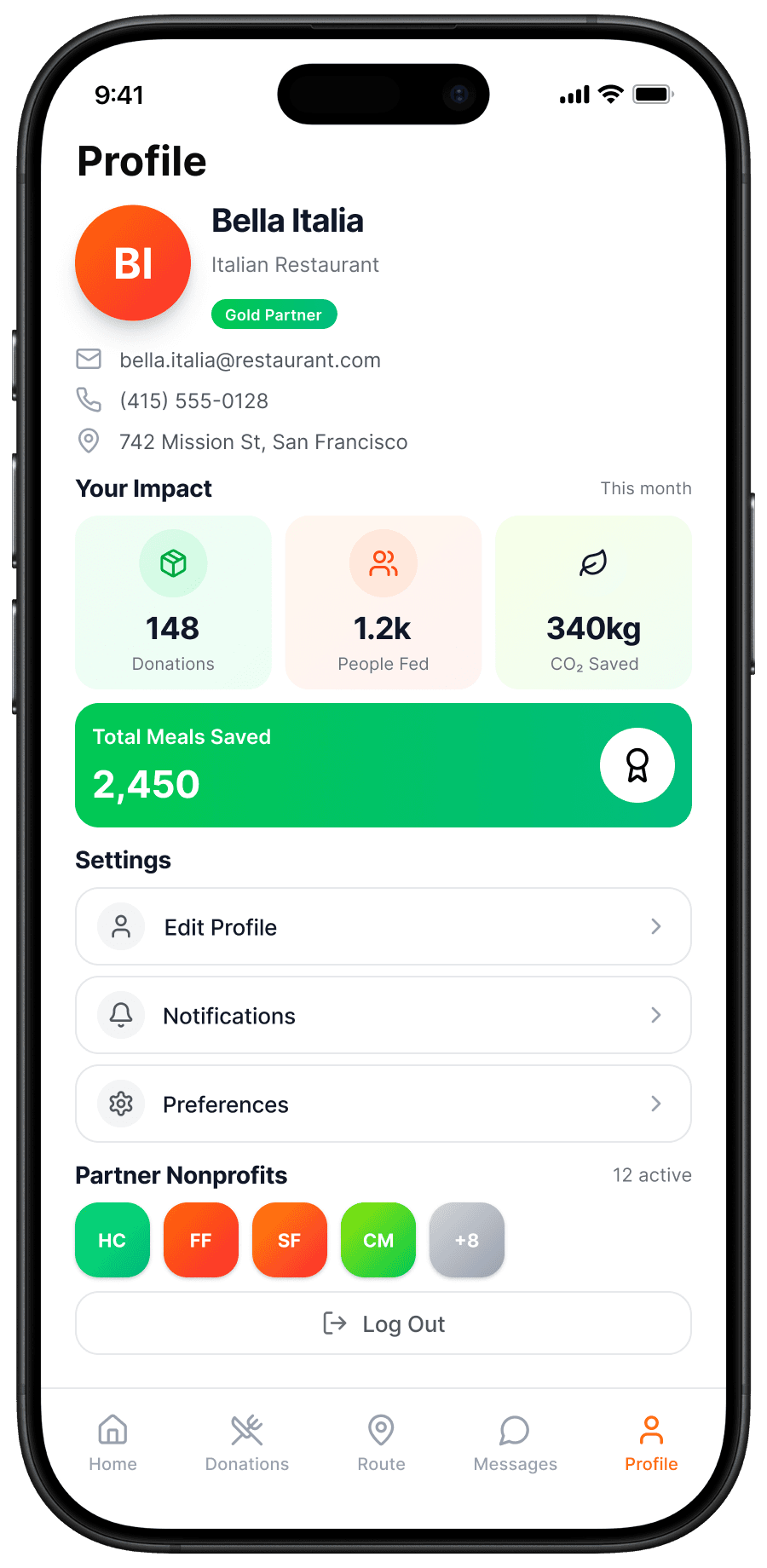
Foodloops reframes donation as synchronized infrastructure built around shared system state, routing intelligence, and measurable impact.
Grounding the Platform in Real Constraints
Stakeholder interviews revealed that operational friction, not motivation, was the primary barrier.
Donors described limited staff capacity, fluctuating closing times, and minimal storage space. Any viable system needed to integrate into existing workflows without creating additional labor.
Timing unpredictability emerged as a structural constraint. Pickup windows cannot be rigid. Coordination must adapt to real operational variability.
To understand breakdowns across actors, we mapped the end-to-end service flow from surplus identification to final distribution. This surfaced friction in status confirmation, pickup sequencing, and communication visibility.
These insights shaped the system architecture:
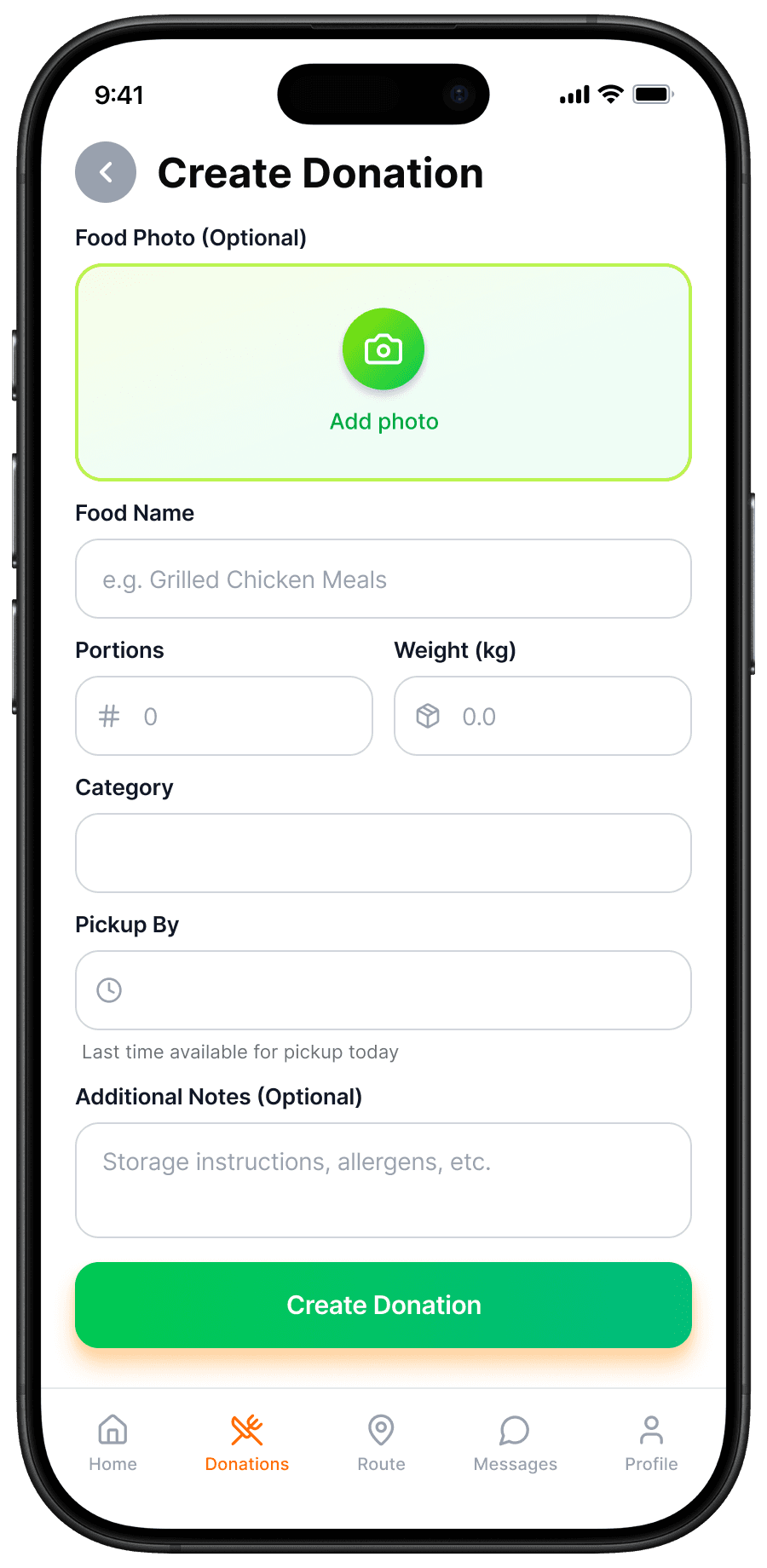
• Minimal input at the point of surplus
• Flexible pickup coordination
• Centralized routing optimization
• Shared status visibility across roles
The platform was designed around constraints, not features.
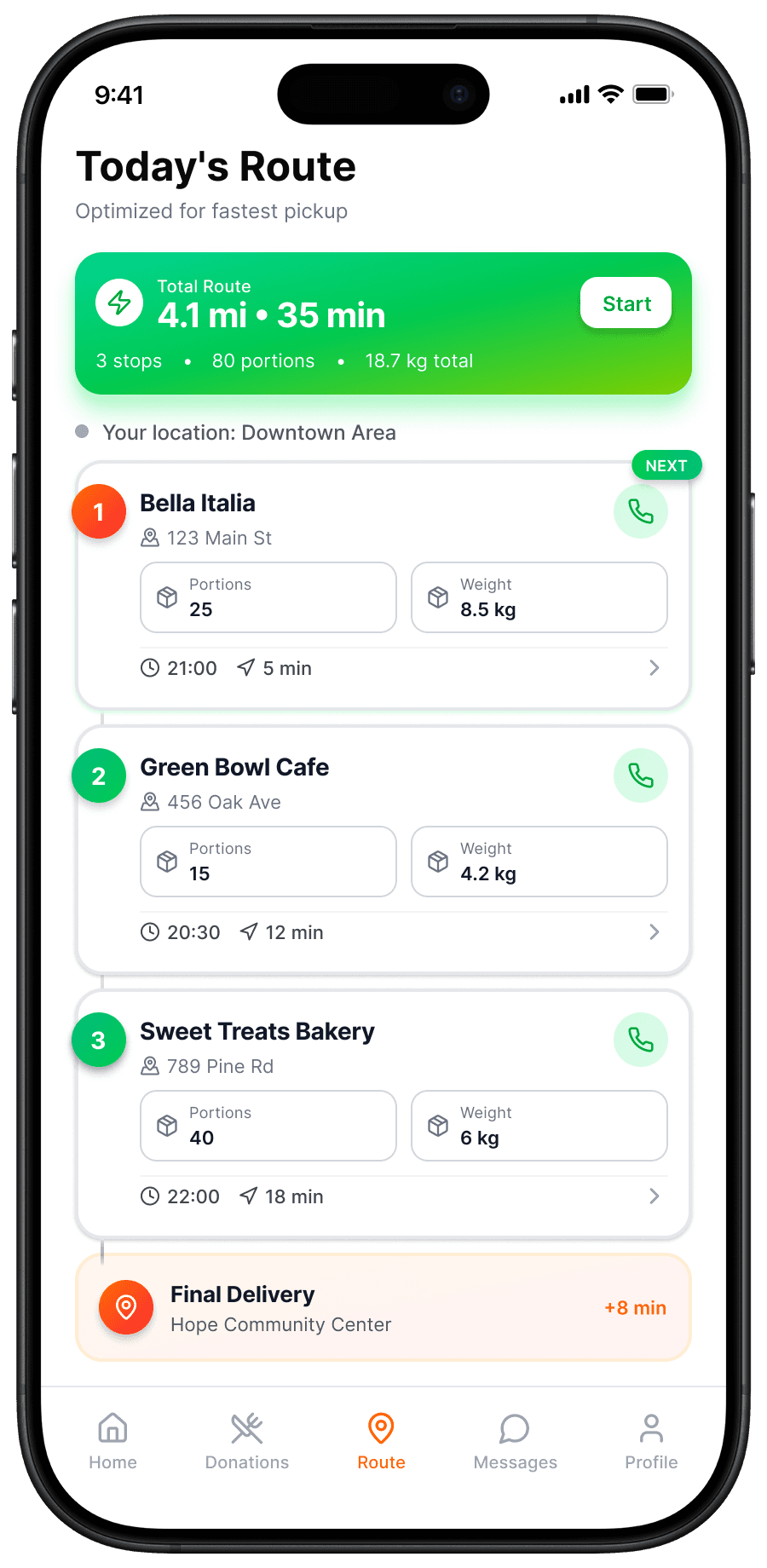
Coordinating Supply and Mobility
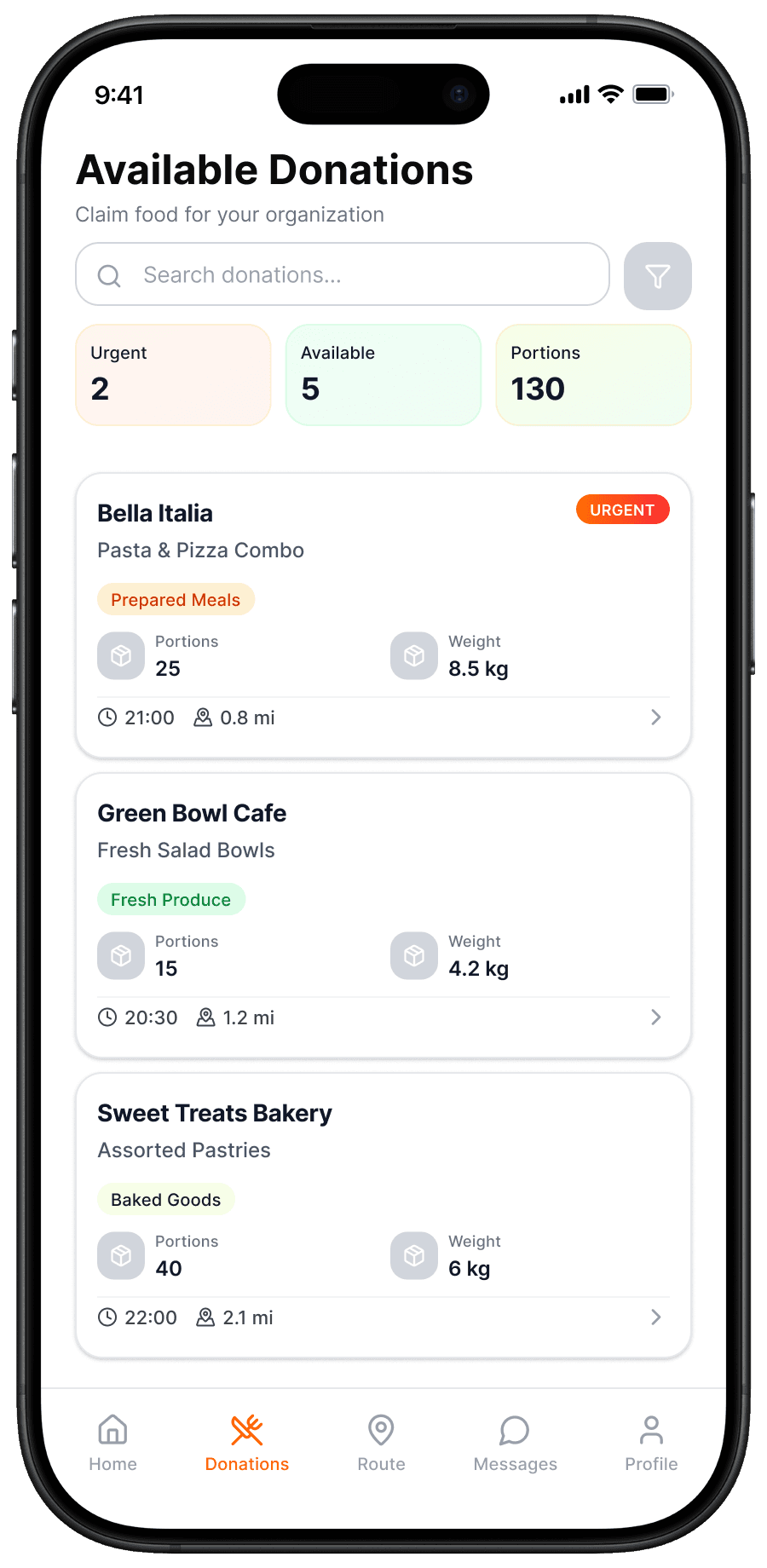
From the recipient side, the system focuses on visibility and mobility efficiency.
Recipients browse real-time available donations, evaluate urgency and proximity, and claim surplus within a shared system state. Once claimed, the system transitions into an optimized pickup sequence that reduces travel time and coordination friction.
Routing functions as the connective infrastructure of the ecosystem. It translates distributed donor supply into structured mobility paths.
Instead of relying on manual calls or spreadsheets, recipients interact with synchronized updates for availability, pickup timing, and completion status.
This orchestration layer enables the platform to scale beyond one-to-one coordination.